Blood test messages
Result-message templates to fill in and copy — consistent wording for normal, borderline and action results.
One calm place for everything the team needs on a busy morning — and everything the practice needs to improve, measure it, and make it stick. With Ernie 🤖, an AI copilot that understands NHS general practice.
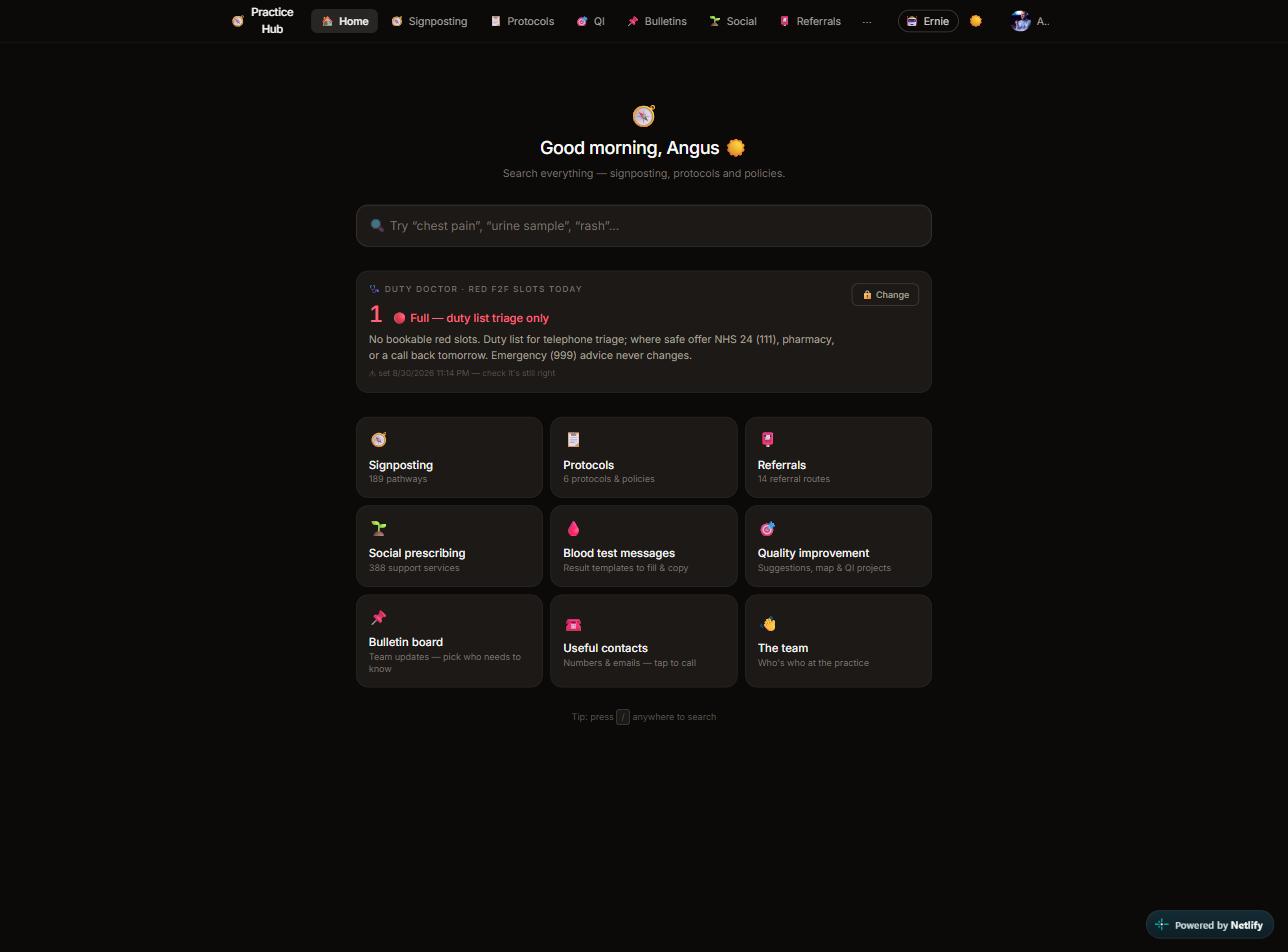
“Water infection”, “funny turn”, “can't sleep” — one search box covers 189 signposting pathways, every protocol and policy, referral routes, blood-test messages, 388 social-prescribing services and the practice phone book. Lay language is translated to clinical terms automatically, and red-flag results float to the top.
Every presentation has a pathway: how urgent it is, the red flags that change everything, the questions to ask, what to do, and a friendly message to read to the patient. Colour-coded emergency / urgent / routine, with social-prescribing ideas attached — so patients are pointed to real support, not just an appointment.
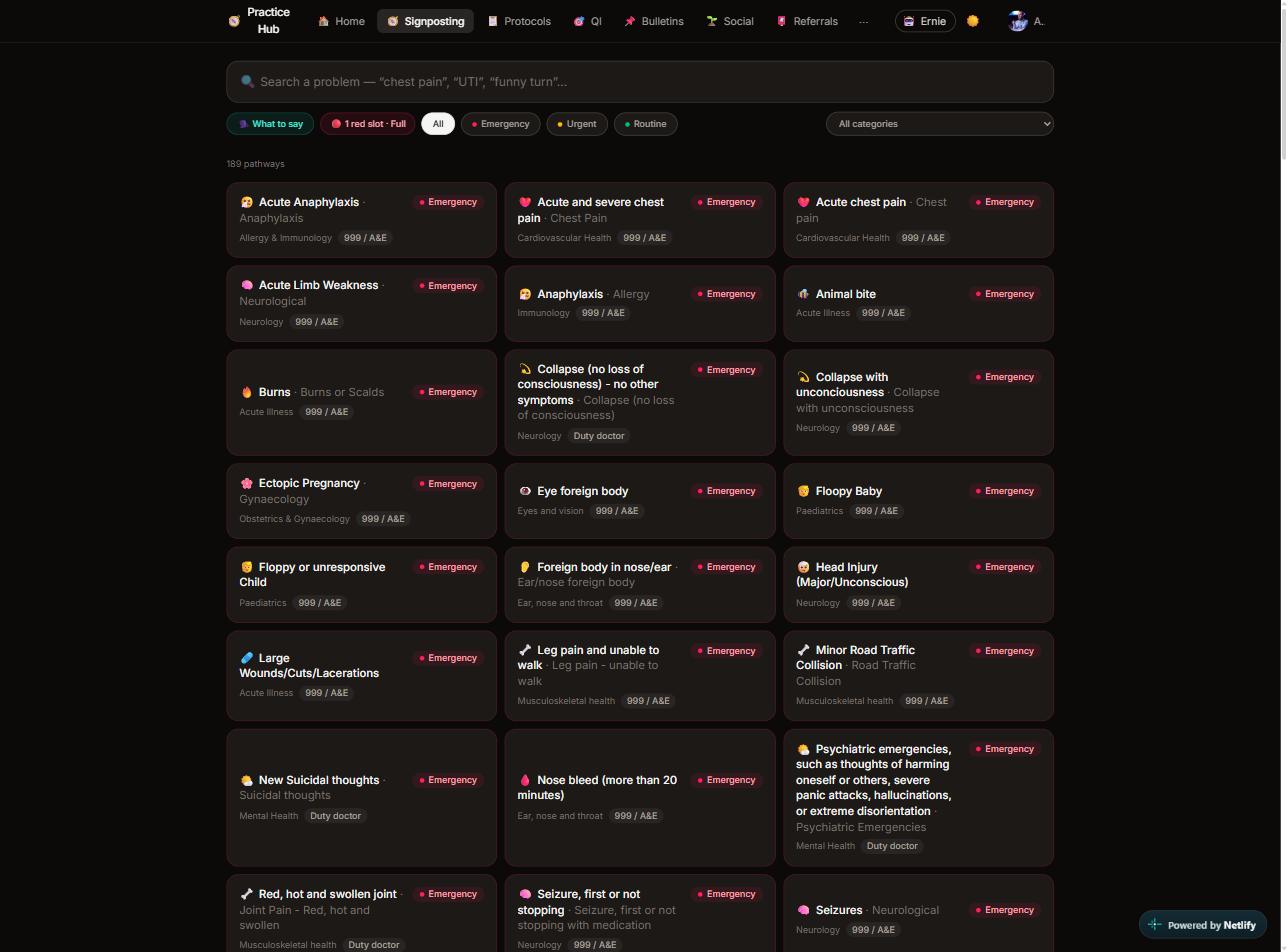
189 pathways, filtered by urgency and category.
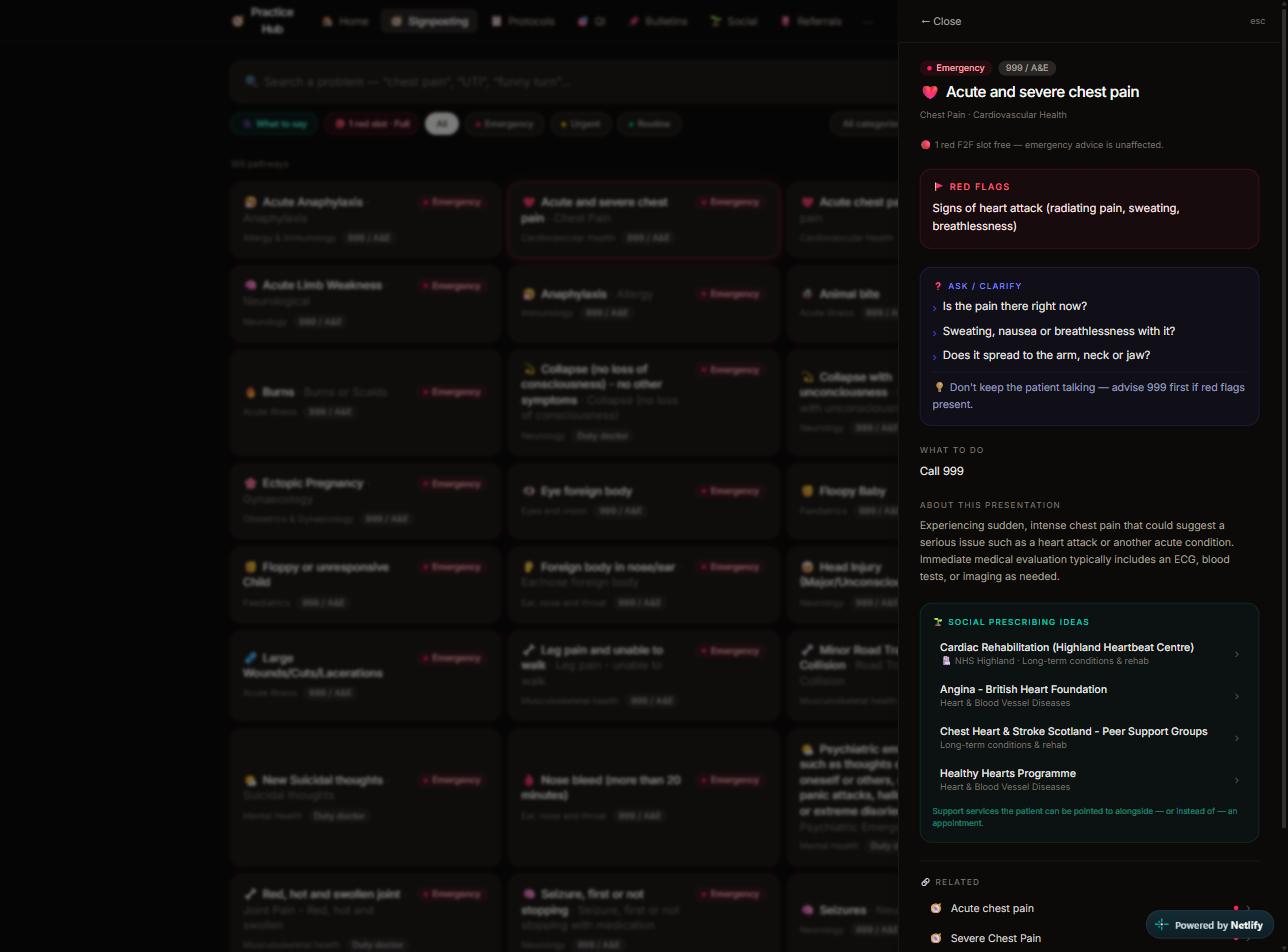
Red flags, ask/clarify questions, the action — and support services alongside.
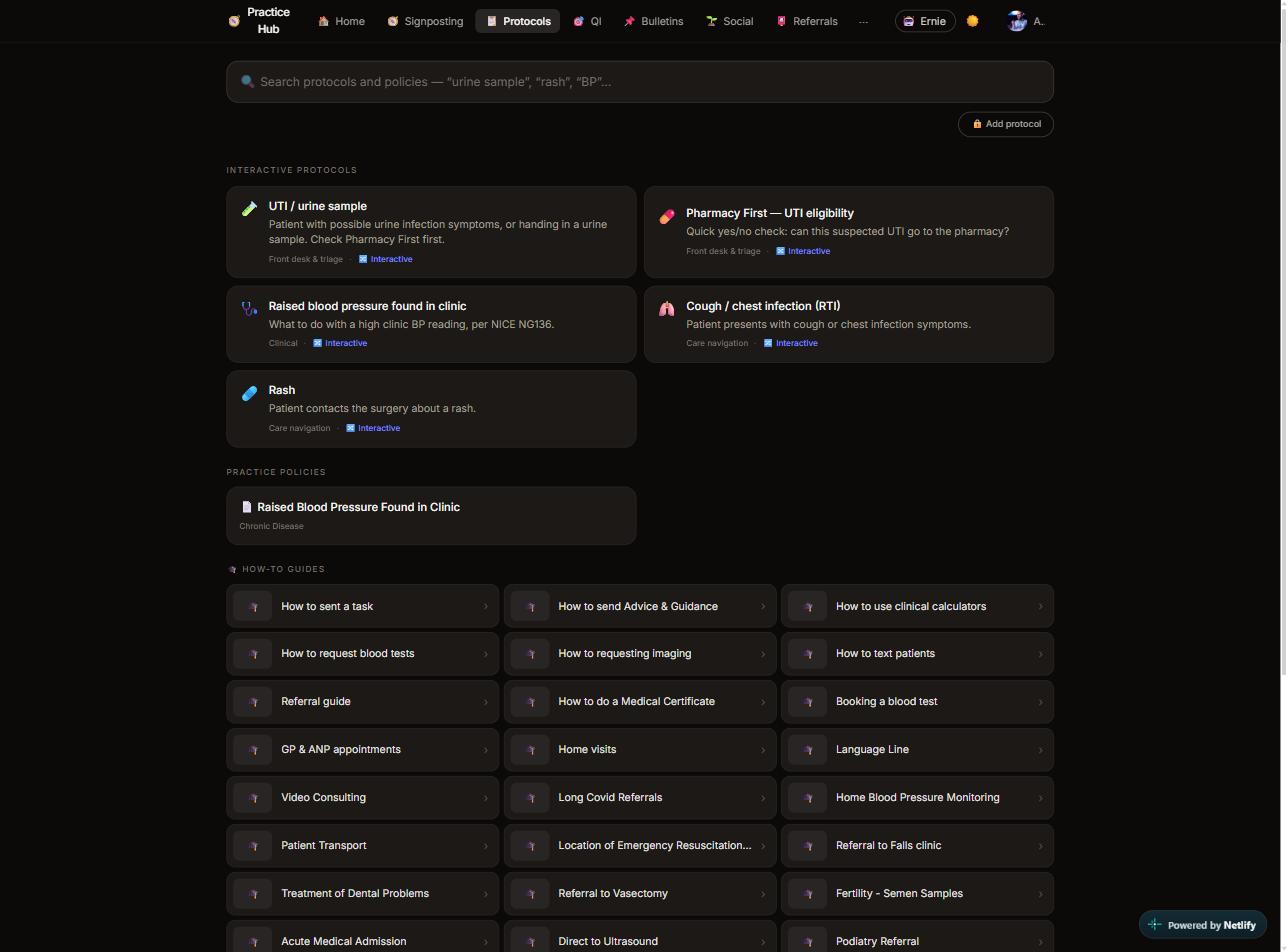
Interactive, tap-through protocols instead of PDFs nobody opens: each step asks a question and branches, so a receptionist handling a urine sample or a high BP reading is walked through the practice's agreed process — with warnings where safety matters.
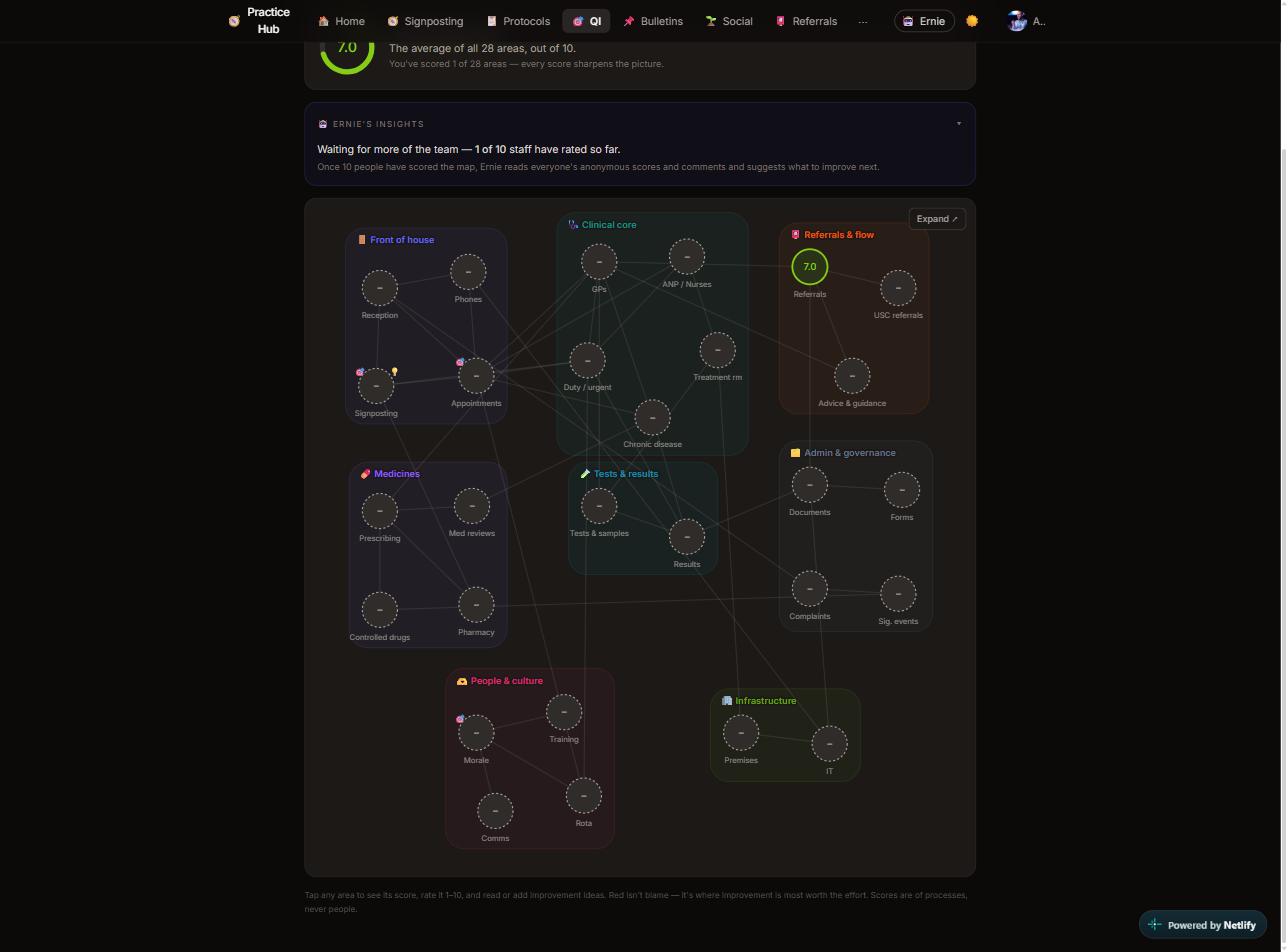
Twenty-eight areas of the practice — reception, phones, prescribing, results, referrals, morale — drawn as a living map. Everyone scores the areas they know, anonymously, against a written standard. Averages only ever appear once three or more people have rated, so nobody's voice is identifiable. Red isn't blame; it's where improvement is most worth the effort.
“Reception keep getting urine samples handed in and nobody knows why.” Tap the mic, say that, and Ernie drafts everything: a proper aim, outcome measures with targets, and dated steps that start with measuring the baseline — PDSA-style, spread over weeks on a live timeline. You review every word before it exists.
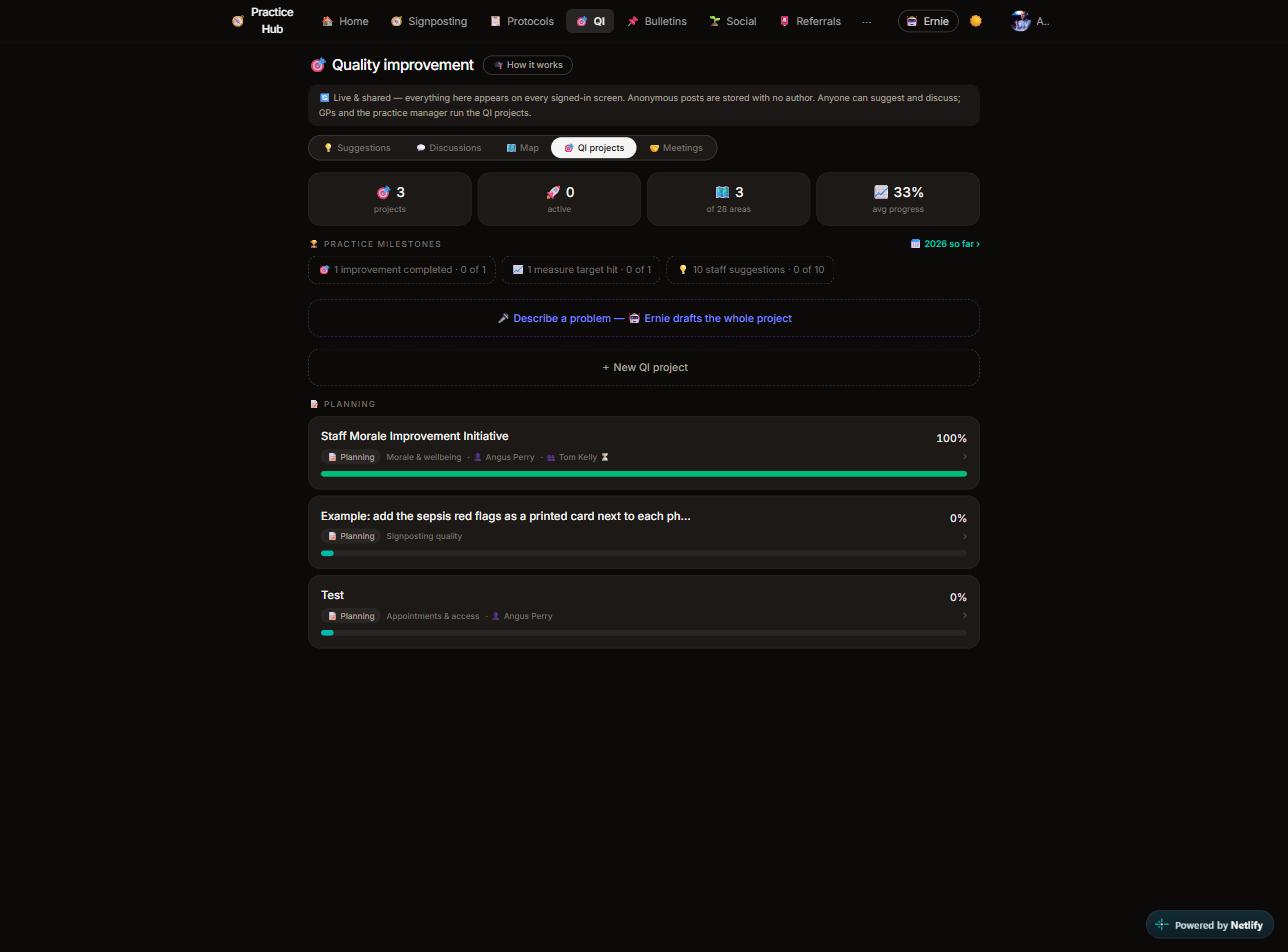
Practice milestones, the year-so-far card, and the 🎤 describe-a-problem button.
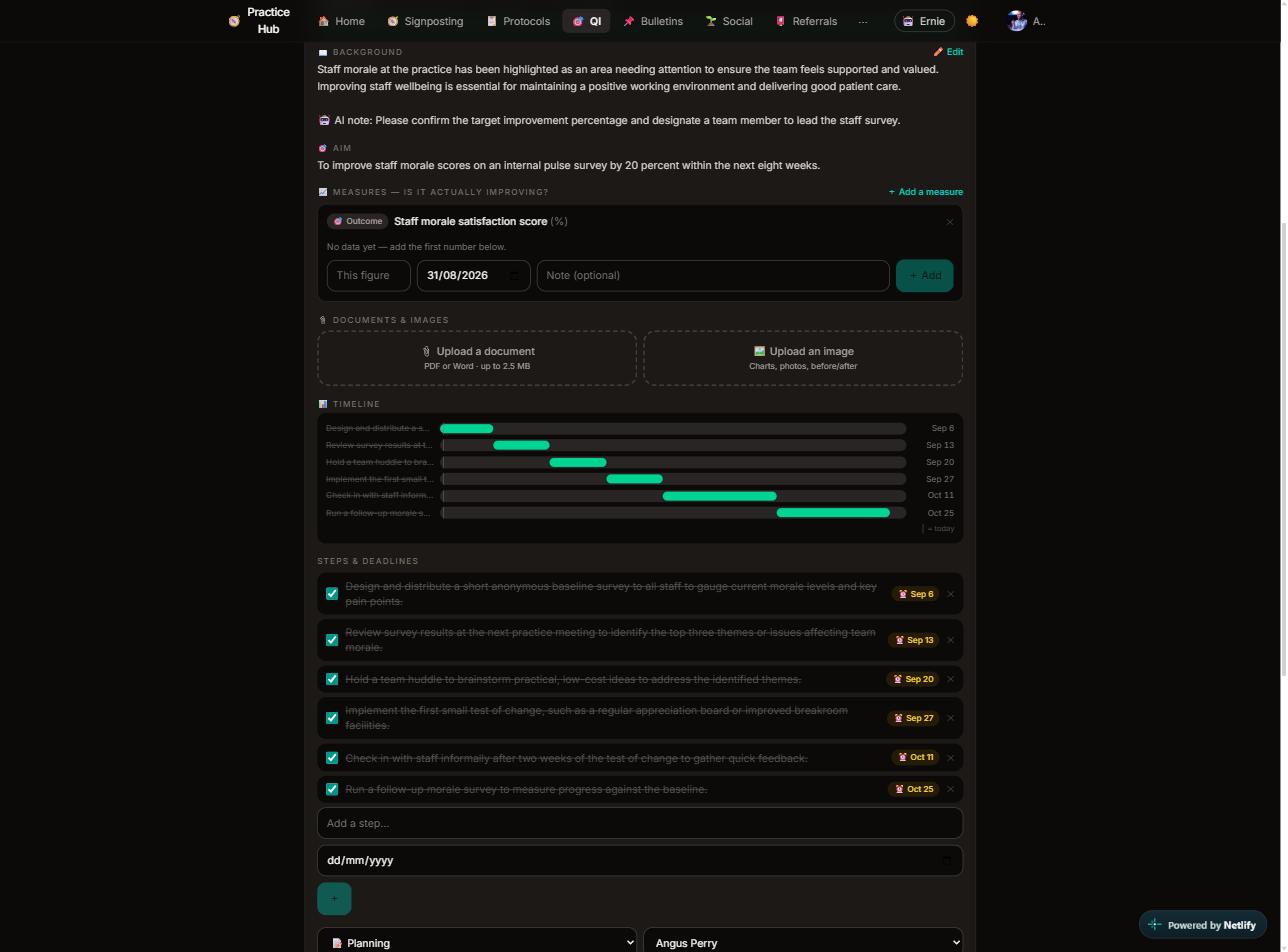
Aim, measures, Gantt timeline and dated steps — drafted from one spoken sentence.
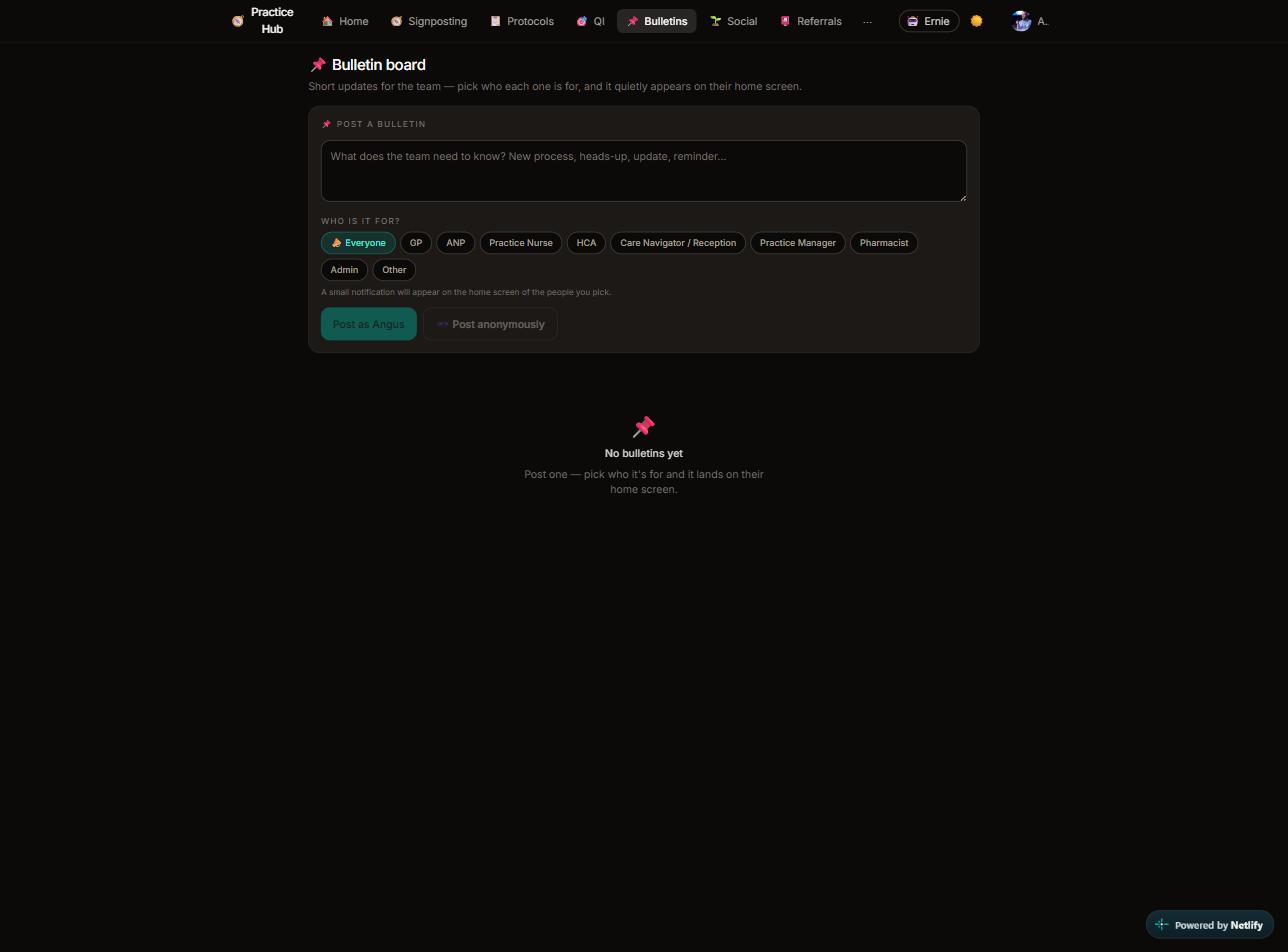
Post an update and choose who it's for — everyone, just the GPs, just reception. It appears quietly on those people's home screens until they've seen it, then gets out of the way. No more all-staff emails for things that concern six people.
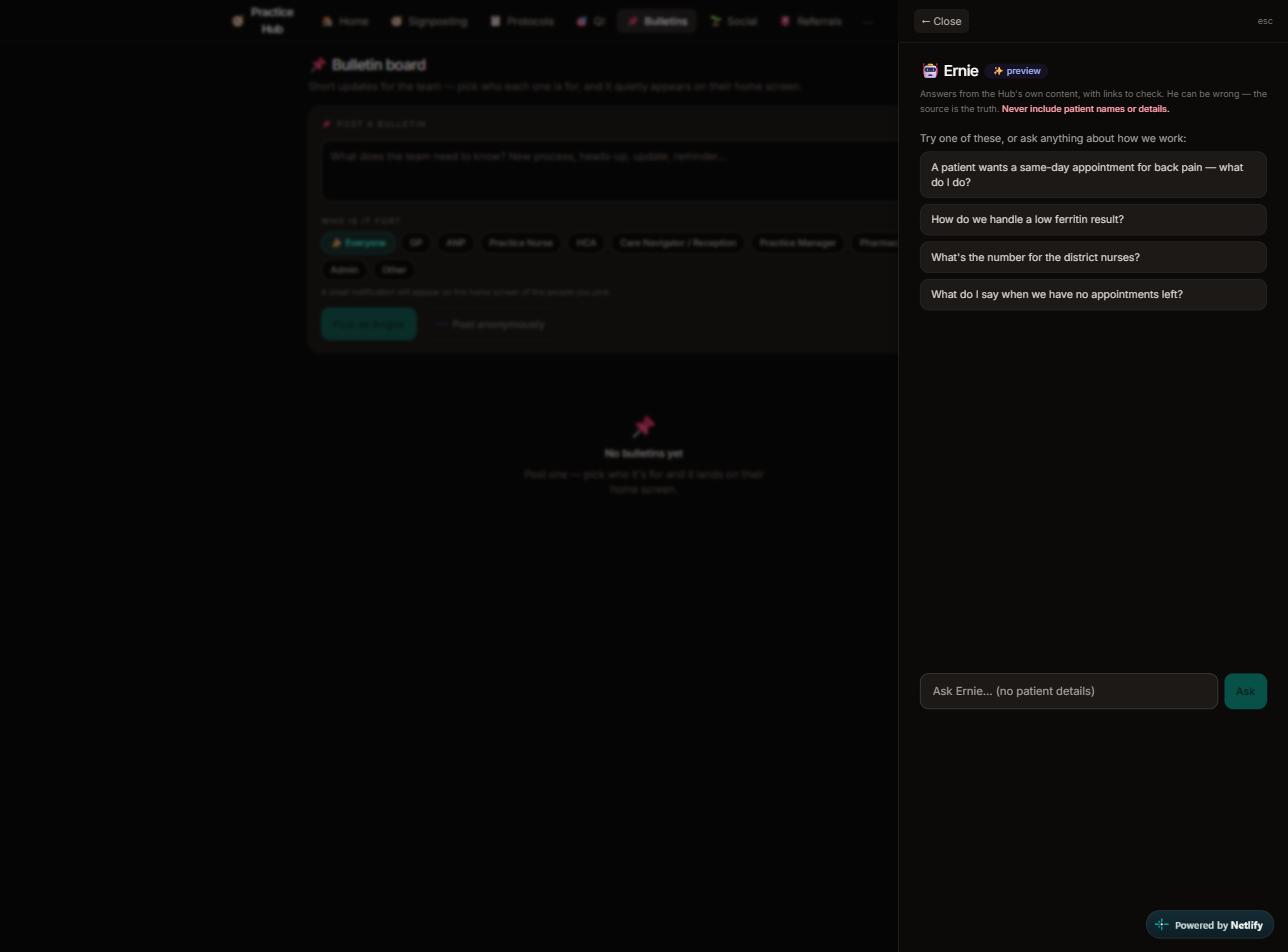
Ask “what do I say when we have no appointments left?” and Ernie answers from the Hub's own content — your pathways, your protocols, your agreed way of working — with links to check the source. If the Hub doesn't cover it, he says so plainly rather than making something up.
Result-message templates to fill in and copy — consistent wording for normal, borderline and action results.
Fourteen referral routes with indications, how to refer and who to contact.
388 vetted support services — local first — linked straight from clinical pathways.
Call scripts for the hard conversations: no appointments left, angry callers, de-escalation.
The numbers the team actually rings — tap to call.
Who's who, with roles, photos and a fun fact — new starters feel at home on day one.
The duty doctor sets today's red-slot count once; every screen and every pathway adapts.
Phone, tablet or desktop, light or dark — installable like an app, updated for everyone at once.
Data lives in a London-region database. Staff-only sign-in with emailed codes — no passwords to forget or leak.
Map scores and comments are protected at the database level. Averages need 3+ raters; raw comments are readable by no one — not even managers.
Ernie suggests; people approve. Clinical content is only ever published by a clinician who has reviewed it.
The Hub holds how the practice works — never patient records. Staff are reminded at every AI touchpoint.